Showing posts with label Muscle Growth. Show all posts

Thursday, February 12, 2015

Top Protein-Packed Fruits and Vegetables

by Kevin DiDonato, MS, CSCS, CES


Protein, which is the basic building block of tissue, cells, and muscle in your body, are vital nutrients that you need in order to protect your health and the health of your cells.

Most people know that great protein sources come from fish, turkey, chicken, and grass-fed beef.

However, there are many other great sources of protein that you can include today, to increase your protein intake.

Let me explain…

Protein and Your Body


See:  Pre- and Post-Workout Protein for Muscle Growth
As previously mentioned, protein plays a very large role in tissue repair and growth.

In fact, in order to build strong, lean muscle tissue, you need to make sure you are getting enough protein, depending on your size and activity level.

Protein, which is a peptide chain of amino acids, is most commonly found in meat products.

However, you may also be able to get adequate protein from fruits and vegetables, which may also boost weight loss plus increase antioxidant status.

There are two types of proteins your body needs, and they are essential and nonessential amino acids.

Essential amino acids are amino acids that you need to obtain through your diet, since they are not synthesized by your body like nonessential amino acids are.

Meat is a complete protein source, which means it has the correct mix of essential and nonessential amino acids.

Most fruits and vegetables contain incomplete proteins, so they need to be combined with other food sources in order to provide the proteins necessary for tissue repair and growth.

Proteins are not only good for building lean muscle tissue, but they may also be an appetite suppressant, which could prevent you from overeating at your next meal.

Fruits and Vegetables Have Protein Too


See:  Fat Burning Tricks Using Protein

There are many ways to include protein into your day.

You can have a protein supplement shake to boost your protein intake, or you can include smaller meals spread throughout the day, that include some kind of protein source.

However, there is one other way to include protein that you may not think about.

When people think of fruits and vegetables, what often springs to mind are low calories, vitamins, minerals, antioxidants, and fiber.

But what about the protein?

Besides water, most of the foods that you eat include some level of protein – even fruits and vegetables.

However, the proteins found in fruits and vegetables often times are found to be incomplete, and need other food sources to supplement the protein they do not have.

Here are some FRUITS that contain protein (a one cup serving):

Dried Apricots 5.0 grams

Avocado 4.5 grams

Cherries  3.0 grams

Bananas 2.5 grams

Coconuts 2.0 grams

Fruits also contain plenty of antioxidants, vitamins, minerals, and water that are important for optimal health and hydration.

Plus, fruit contains plenty of fiber, which has been linked to reduced cholesterol levels, decreased appetite, and a reduced risk for heart disease and some cancers.

Here are some VEGETABLES that contain protein (a one cup serving):

Spinach  5.0 grams

Asparagus 4.2 grams

Cauliflower 3.8 grams

Broccoli  2.4 grams

Celery  1.5 grams

Vegetable protein is both low in calories and fat, which could be great for people watching their calorie intake in order to lose weight.

Plus, they are full of vitamins, minerals, and fiber, for a complete all-around food source that could improve your health.

The Other Ways to Include Protein


Most people already know that grass-fed red meat, chicken, fish, and turkey are all great sources of lean protein.

However, if you are looking for alternative foods that contain healthy doses of protein, then look no further than your fruit and vegetable section.

Fruits and vegetables are not only packed full of antioxidants, vitamins, minerals, and fiber, but they can also be a low-calorie protein source, perfect for building lean, sexy muscle, without packing on the calories.

This could boost fat loss, speed up your metabolism, and sculpt your abs, butt, and thighs in no time at all so you will be beach-body ready by next year!



Tuesday, January 13, 2015

12 Signs You Need to Eat More Protein

musclemanby Mark's Daily Apple

Protein is an essential macronutrient. We can’t make it. We can pull it from our structural tissues – our muscles, our tendons, our organs – if we’re in dire need of amino acids, but that’s not a healthy long term strategy. For all intents and purposes, we need to consume protein to stay healthy, fit, happy, and long-lived. But we need to consume the right amount at the right times. And since I’ve already talked about how much protein certain populations should be eating on a general basis, shown you how to identify when you need more carbs, and explained how to tell if you need more fat, today’s post will cover 12 situations, symptoms, and signs that indicate a direct need for more dietary protein.
Let’s jump right in:

You’re older than you used to be.

For years, the elderly have been told not to expect anything from their bodies but decay and decrepitude. They can lift weights if they want, but they’re not going to get very strong and if anything they’ll just improve “tone” and “balance.” Well, that’s nonsense. The elderly absolutely can get stronger and even build muscle and improve their bone mineral density by lifting heavy things. Maybe not as easily as a 22 year old. Maybe not as much as when they were younger. But they can do it. There’s just one caveat: they need more protein than their younger counterparts.
The elderly aren’t as efficient at processing protein. To maintain nitrogen balance or tip the scales toward lean mass accrual, an older person is going to need more protein than a younger person – all else being equal. That goes for resistance training oldsters, puttering around the garden oldsters, and taking an hour to walk around the block oldsters. More protein is better than less.

You’re always hungry.

Of all the macronutrients, protein is the most satiating, and high-protein diets (which are usually also low-carb) consistently result in the greatest inadvertent reduction in calories. You don’t consciously stop eating. You’re not fighting your desire for food. You simply don’t want it. That’s the perfect antidote to insatiable hunger.
Just try it. Make a point to add an extra 20 grams of protein each meal. A few ounces of steak here, a chicken leg there, a piece of salmon, a few eggs. You’ll be fuller, faster.
So if your stomach resembles a bottomless pit, try increasing your protein intake.

You’re cutting calories.

Traditional calorie-restricted dieting certainly can help you lose body weight, but it also causes the loss of lean muscle mass. That explains why so many people who simply reduce calories to lose weight end up skinny-fat. Luckily, increasing the amount of protein you eat can offset some of the muscle loss caused by calorie restriction:
  • In weightlifters, a low-carb hypocaloric diet with 2x the RDA for protein resulted in greater nitrogen balance than a high-carb hypocaloric diet with RDA protein.
  • In women, a low-calorie, high-protein diet was better than a conventional high-carb, low-fat diet at promoting lean mass retention, even in the absence of exercise.
If you’re reducing calorie intake, you’d better increase the absolute amount of protein you’re eating. As an added bonus, the satiety from increasing protein will make the cutting of calories – an infamously onerous task – much easier.

You’re lifting heavy things.

Lifting heavy things changes how your body processes protein. On the one hand, resistance training makes you more efficient at protein utilization so that you actually need less protein to maintain your muscle mass. If maintenance is your goal, you probably don’t need extra protein.
However, resistance training also pushes your anabolic ceiling higher so that you can leverage higher protein intakes into more muscle mass and greater strength gains. The more protein available, the greater the response.

You’re exclusively eating plant protein.

For the most part, plant proteins are less efficient than animal proteins. They’re often missing essential amino acids. And in the case of something like soy protein, it’s just not as effective as an animal protein like whey:
The easiest thing would be to add a whey protein supplement or start eating pastured eggs from happy hens (or raise your own to ensure their quality of life), but if you’re not going to do that at least increase your overall protein intake to make up for the inefficiencies of plant protein.

You’re engaged in chronic cardio.

As much as I caution against chronic cardio, people are still going to do it. I stuck with it for many years, even long after I’d realized the damage it was doing, because I was addicted to the rush of competing. So I get it.
If you insist on endurance training, you’re going to need more protein to stave off the loss of muscle. Even though you’re not necessarily eating less food when you exercise – maybe more, if anything – your caloric expenditure is greater and the net result is a negative calorie balance. A higher protein intake can stave off the lean mass losses associated with negative calorie balances, whether they stem from lower calorie intakes or higher expenditures.

You’re craving meat.

A lot of people get mixed up trying to interpret cravings because in our modern food environment, real nutrient deficiencies often masquerade as cravings for junk food. Sometimes, though, a craving is correct. And animal research suggests that a specific appetite for protein exists in mammals. When mice are protein deficient, they tend to seek out protein-rich foods and ignore protein-poor foods. I know when I haven’t had a good piece of meat in awhile, or I’ve just finished a heavy lifting session, I get a primal (small “p”) urge for it. I’ll almost salivate at the smell of a cooking steak.
So if you’re craving meat, give into it. Don’t ignore the craving. It’s probably right. There’s really no mistaking a desire for a delicious slab of animal flesh.

You’re eating lots of muscle meat.

Wait. What? The consumption of a potent source of animal protein raises the requirements of protein? How does that work?
Muscle meat is a rich source of methionine, the amino acid that the life extension crowd is always railing against as carcinogenic, inflammatory, and anti-longevity. They’re onto something, but there’s evidence to suggest that you don’t need to eliminate, or even reduce your methionine/muscle meat intake as long as you balance it out with another type of animal protein: gelatin.
Found in bonesconnective tissuesgristle, cuts of meat like oxtail, neck, and shank, or gelatin supplements, gelatin is a protein composed primarily of amino acids like glycine and proline. Animal studies show that “methionine toxicity” can be countered by glycine supplementation. In fact, one of the primary mechanisms of methionine toxicity is glycine depletion. My favorite way to balance out methionine and glycine is to supplement with oxtail stew.

You’ve got achy joints.

In the previous post about fat requirements, I explained how my first response to achy joints is to increase my omega-3 consumption because that quickly curtails inflammation. But if that doesn’t work – and even if it does – I then turn to gelatin. Gelatin is connective tissue; it’s made of the stuff we use to repair and build our own cartilage, tendons, ligaments, and fascia. A few studies indicate that eating gelatin can improve joint pain:
A novel collagen type II supplement (a fancy gelatin supplement) improved pain, range of motion, and stiffness in women with severe joint pain and patients with rheumatoid arthritis.

You’re on bed rest.

Bed rest eats at lean muscle mass. It makes sense from your body’s point of view; since you aren’t using it, you don’t really need it. Placing individual limbs on bed rest also has the same effect. Wearing a cast on your arm and preventing it from performing simple, everyday contractions will initiate the atrophy process within days. In effect, unused muscle on bed rest becomes less responsive to protein/amino acids, or “protein resistant.” The answer is not to throw up your hands (if you can even move them) and give up. The answer is to increase your protein intake to mitigate the inefficiency.
Increasing protein during bed rest will slow down (but not completely halt) the breakdown of lean mass and improve muscle function.

You’re experiencing chronic stress.

Stress hormones are catabolic; they increase muscle and tissue protein breakdown. If you’re experiencing an acute stressor, like a tough workout, this catabolism is normal and necessary and gives way to anabolism. That’s how we get stronger, faster, fitter, and more capable. But if that stress becomes chronic, and the stress hormones are perpetually elevated, the balance tips toward muscle catabolism. Until you’re able to get a handle on the stress, eating more protein should mitigate the damage and might even reduce the stress itself.

You’re coming off surgery, recovering from burns, or trying to heal a wound (or all three).

Traumatic damage to your tissues requires more protein to make the necessary repairs and recovery.
In wound patients, protein deficiency is common and impairs the healing process. Wounded rats placed on protein-free diets also take far longer to heal than wounded rats eating protein-replete diets.
After surgery, which is pretty much a controlled wounding, protein intake is probably the most crucial aspect of the patient’s nutrition and subsequent recovery. Many doctors even recommend that surgical patients take whey protein isolate for a couple days after a procedure.
After a severe burn, your metabolism goes into hyperdrive. Stress hormones and inflammation skyrocket, leading to accelerated tissue breakdown, lean mass reduction, and overall body weight reduction. To counter this, “early and continuous” high-protein enteral feeding has become part of standard care for severe burn victims. Adult burn victims need at least 1.5 g/kg bodyweight; kids need up to 2.5 g/kg.
Most research focuses on the importance of protein intake after severe injuries, burns, and surgeries, but the same principles should hold true for recovery from minor stuff. This is also a good time to increase your gelatin/collagen intake, as those are the primary proteins used to rebuild new skin and gelatin is also a good source of arginine, an amino acid that promotes wound healing.
There you have it, folks: 12 signs, situations, and symptoms that indicate you should probably be eating more protein. I hope they’re helpful!
Which of these signs ring true? Are there any I’ve missed? Let’s hear about it in the comment section.
Mark's Daily Apple


Monday, October 13, 2014

How to Eat Protein Pre- and Post-Workout for Muscle Growth

By: Brian St. Pierre, CSCS, CISSN

If there is one nutrient that you need to support your training and recovery, protein would be it! All the exercise in the world won’t help you build muscle or get lean if it is not supported with proper nutrition, which should always include a good dose of some high-quality protein or high quality protein powder.


Many people argue the merits of whether you should have protein before you workout or after, when in reality the best time is both! The purpose of having protein before you exercise is to prevent muscle protein breakdown and to promote muscle protein synthesis. This is fancy talk for preserving the muscle you already have, and helping to promote the growth of new muscle tissue.

In addition to consuming some quality protein before you exercise, you should also consume some after as your muscles are highly receptive to incoming nutrients after a training session. The purpose of protein after training is to simply continue the benefits of pre-training protein, to preserve the muscle you already have and help create new muscle tissue.

That’s the big picture anyway, but let’s dig a little deeper and see more ways in which protein around our training can improve our results!

Protein Before You Train

Recent research has shown that consuming protein before exercise can decrease, or at least prevent the increase of, markers of muscle damage (myoglobin, creatine kinase and myofibrillar protein degradation) more than groups who consumed just carbohydrates or placebo.

This is one of the key reasons to have protein before you train, as reducing the damage to the muscles can improve recovery time and cause better adaptations to training over the long-term.

In addition, protein consumed before training will also flood your blood stream with amino acids as your body needs them, beginning the process of creating new muscle while you are training!

Aim to consume about 15-40 grams of protein within 30-90 minutes before training, depending on your size and needs. This can be consumed either in a shake or a mixed meal, again depending on what best fits your needs.

Protein After You Train

While most people know they should have some protein after they exercise, they often believe that they must have a shake or meal immediately after finishing their last set. The fact is if you consumed an adequate amount of quality protein within 30-90 minutes before you started exercising, then there is no need for immediate consumption. In reality as long as some quality protein is consumed within an hour after cessation of training, you are golden.

On the flip side of that, waiting too long can compromise the beneficial adaptations to training, and decrease your results. So while you don’t have to slam down a shake immediately after training, it wouldn’t be in your best interest to wait for 3 hours either.

A perfect example of the importance of having protein around your training was a recent 10 week trial where the researchers had subjects consume a protein/carbohydrate mixture before and after training, and another group consume that same mixture at the two points in the day furthest from the training.

The group that surrounded their training with the protein/carbohydrate mixture had greater gains in lean mass and strength, while also losing some body fat to boot (the other group actually gained some fat). This clearly indicates that surrounding your training with adequate amounts of high-quality protein (and carbohydrates) will maximize results, even if your total intake for the day is the same.

Aim to consume about 15-40 grams of protein within 60 minutes after training, again depending on your size and needs. Whether this is consumed as a shake or a solid meal is solely dependent on what best fits your needs.

The take home point is that it is a good idea to surround your training, both before and after, with high quality protein to maximize the benefits of exercise. This will minimize protein breakdown, and maximize your ability to build or maintain lean muscle mass.

Download your Free Report, "What to Never Eat After You Workout!" Fuel your body all day to give you better results during and after workouts.

Mark Dilworth, BA, PES
Sports Fitness Hut


Thursday, February 27, 2014

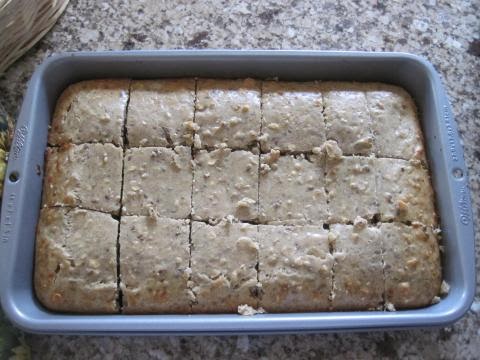
Protein Banana Walnut Brownies

Protein is important to eat with every meal and post-workout to spare muscle mass loss.  This is especially true when you are dieting.  


Banana Walnut Brownies

Ingredients:

  • 1/2 cup rolled oats
  • 12 scoops vanilla protein powder
  • 2 cups walnut meal (grind the walnuts in a blender…that’s it!)
  • 1/4 tsp baking powder
  • pinch salt
  • 2 medium bananas (very soft, mashed)* I used frozen, thawed over-ripe bananas from my freezer
  • 2 large Omega-3 eggs
  • 2 Tbsp pasture butter
  • 2 Tbsp water as needed

Directions: 
Mix the dry ingredients together in one bowl and the wet ingredients in another. Then mix the two bowls together. If needed, add a tbsp or two of water to mix well. 

Heat oven to 350F. Place ingredients in a metal 7 x 11 non-stick baking pan and bake at 350F for 12 mins until a knife comes out clean from the SIDES of the pan (not the middle). It should be slightly undercooked in the middle when you first take it out. If you bake this too long it will be very dry.

Makes 15 small bars

Nutrition Facts (Per Bar):

Calories: 190
Protein: 12 g
Carbs: 8 g
Fiber: 1.7 g
Fat: 12 g fat

Get your muscles on!

Mark Dilworth, BA, PES
Sports Fitness Hut


Thursday, March 14, 2013

The Dirty TRUTH About Whey Protein

by Joel Marion, CISSN

Perhaps the most popular nutritional supplement EVER is whey protein. Heck, you can even buy some of the worst, cheapest whey protein around conveniently at your local Wal-Mart. Now that’s when you KNOW it’s popular.


But here’s the truth: Whey protein, even the “high quality” stuff that you’d pay an arm and a leg to obtain from your local Vitamin Shoppe or GNC, could very likely be stalling your fat loss progress and, even WORSE, causing you to GAIN weight.
And if that wasn’t enough, here are the absolute WORST times to consume whey protein:
1. During the day
2. In the evening
Scratching your head? Don’t: you understood it perfectly. Whey protein simply isn’t a great protein to consume at any time of day, and for specific reasons.
1. Whey Protein Absorption – A review on the rate of protein absorption published in 2006 in the International Journal of Sport Nutrition and Exercise Metabolism reported that whey protein isolate absorbs at a rate of about 8g/hour. This is in large part due to the fact that whey is not broken down into small enough peptides by our body’s natural enzymes in time to be absorbed.
Couple that with the fact that the window of opportunity for whey protein to be absorbed is 1.5 hours, your body at maximum will be able to absorb 12 grams of whey protein from a single serving.
Kind of makes those 40g whey protein shakes seem foolish, doesn’t it? Well, that’s because they are.
Simply put, whey protein passes through the system far too rapidly to be adequately absorbed, leaving the majority of your protein shake wasted…literally.
2. Insulin Release Associated With Whey – Which of the two items below cause a greater spike in insulin?
wonder bread
a) White Bread
whey protein isolate now brand
b) Whey Protein
Well, as you can probably guess, if you chose the horrendous, high glycemic, void-of-all-nutrition white bread, you’d be 100%…WRONG.
That’s right, a 2012 study published in Nutrition & Metabolism identified that the specific amino acids in whey protein stimulate beta cells to secrete more insulin than a similar amount of carbohydrate from white bread.
In the presence of insulin, fat burning essentially stops.
This makes a whey-protein-only supplement a big-time no-no for evening use, especially pre-bedtime when avoiding spikes in insulin are paramount as metabolism is already slowing down in preparation for its normal, much slower sleep rhythm.
The truth is, whey protein simply isn’t an ideal protein to use at any other time other than immediately following exercise, and even then the amount you’re able to absorb on a per serving basis is extremely limited.
The Solution: A true time-released protein blend.
The fact is, whey is an extremely high quality protein with one of the highest biological values of any protein source, but it possesses two undeniable downsides in its very limited absorption rate and record-setting insulin response.
Still, you may be wondering if it’s possible to somehow get the positive benefits of whey without the downsides, and the answer is YES. The trick is to combine whey with other medium-speed and slow-digesting proteins such as milk protein and micellar casein, respectively.
This combination of proteins will significantly reduce the overall insulin response from the whey while ensuring optimal absorption of each protein due to its slower digestion and time-released nature.
But don’t be fooled – most time-released protein blends are a total FRAUD. Sure, it’s “sexy” to market a time-released “blend” of proteins, but the unfortunate truth is that most of these blends consist of 90% cheap, denatured whey and contain very little of the more expensive slow-digesting proteins that make a true time-released protein product work.
How do you know how much of each protein is contained in these so-called “blends”? Well, the ONLY real way to know is by the brand listing the exact amounts of each protein on their label, which hardly anyone does.

Except BioTrust Low Carb.

Biotrust Low CarbWith BioTrust Low Carb we put together a true 25-25-25-25 blend of micellar casein, milk protein concentrate, whey protein isolate, and whey protein concentrate. Yes, it’s much more expensive to produce than a simple, low-absorbing, insulin-spiking whey protein powder, or a fraudulent “proprietary blend” of proteins that in reality is still 90% whey, but we feel we owe it to our customers to give them a product that delivers a true solution to the whey protein dilemma, even if it cuts into our profit margins.
After all, we created BioTrust for you, your body, and your results.
  • It’s 100% All-Natural – no artificial colors, sweeteners, or flavors
  • It’s naturally sweetened with stevia and a naturally sweet form of fiber called inulin
  • It’s certified hormone-free, sourced from cows not treated with the potentially dangerous growth hormones rBGH and rBST
  • It’s the very first, and currently the ONLY, protein product on the market to use a breakthrough new enzyme that has been shown to more than DOUBLE protein absorption
And it tastes awesome. See for yourself.


Mark Dilworth, BA, PES

Saturday, August 18, 2012

The Top 10 Ways to Achieve Amazing Results from a Workout

Articles are written every day touting the new best way to train, but renowned trainer Stephen Cabral believes remarkable results are achieved by adhering to a few simple principles.

In his book, A Man’s Guide to Muscle and Strength (Human Kinetics, 2011), the 2011 Personal Fitness Professional (PFP) Personal Trainer of the Year condenses thousands of hours of research on exercise and training into a list of the most powerful training principles for transforming any workout program.

“If you follow these 10 principles and put them to work for you in your workout programs, I believe your results will be nothing short of amazing,” says Cabral, who has spent 12 years training everyone from professional athletes to A-list celebrities.

“Plus, these principles have withstood the test of time and have been proven to work for all guys no matter what their genetic makeup.” Cabral is convinced that if a man did nothing else but follow these 10 principles, he’d have close to 90 percent of the skills needed in order to advance in weight training.

1. Follow the SAID principle. The acronym for specific adaption to imposed demands, this principle encourages men to keep pushing the bar higher each week by making small and steady improvements that add up to massive gains over time.

2. Implement EDT. The system of escalating density training means that men should keep each workout to 45 minutes in length, cutting out all the “water-cooler talk” and rest periods in order to complete more work in less time or the same amount of time.

3. Move in multiple planes of motion. By focusing on both side-to-side movements and rotational work, instead of just moving forward and backward, men can develop greater strength and become more functional and well-rounded lifters.

4. Focus on movements, not muscles. More free-weight and cable-based exercises will help a man create a stronger, more functionally fit body. A body has to work much harder when not seated in a stationary machine.

5. Use full ROM. Unless a physical therapist or doctor advises against it, Cabral recommends working through a full range of motion in order to maximize the degree to which the muscle fiber is being stressed and recruited during each movement.

6. Push, pull, and twist. Because the body can work in only three ways, men should ensure that they do pushing, pulling, and rotational work in each workout in order for their bodies to stay balanced and in proper alignment.

7. Use a fast–slow combo. Since the goal is to increase strength and develop a lean, muscular body, Cabral wants men to use a 1-0-4 tempo for the majority of lifts. This means pushing the weight quickly over one second, not pausing at the top, then lowering the weight over approximately four seconds, creating greater muscle growth.

8. Lift with your legs. Cabral stresses that running or doing cardio does not work the legs. To increase leg strength, functionality, balance, alignment, and shape, men must train them with some type of resistance.

9. Use only anabolic-based programs. For men lifting three times a week, it is essential that they focus on major muscle groups and preferably total-body training sessions in each workout. “You want working out to be a part of your healthy lifestyle, not your workout to be your life,” says Cabral.

10. Rest. Ignoring the forgotten principles of rest, recovery, and regeneration in strength training will lead to countless overuse injuries to joints and muscles.

“By using these principles, you will dramatically improve your chances for achieving your goals in gaining strength and muscle while keeping your body healthy,” Cabral concludes. “Once you’ve mastered the techniques and knowledge from these 10, you can begin to branch out from there and expand your exercise education.”

In addition to more specific details about these principles, A Man’s Guide to Muscle and Strength is packed with over 140 exercises and more than 300 photos, delivering straightforward strength training programs designed for real guys who want real results. For more information, see A Man’s Guide to Muscle and Strength.


Mark Dilworth, BA, PES
Your Fitness University
My Fitness Hut
Her Fitness Hut
Sports Fitness Hut


Tuesday, May 15, 2012

The TRUTH About Sleep And Testosterone Levels

By Kevin DiDonato MS, CSCS, CES

Society today has a problem with sleep. We are just not getting enough of it! This could be causing you to be extra sleepy, lose concentration, and for men, lower your sex drive.

It has been shown that roughly thirty percent of people do not get more than 6 hours of sleep per night.

Sleep is a time when the body is able to repair damaged tissue and cells, ease the mind, and even help your lose weight.

In men, however, not getting enough quality sleep can do a number on your testosterone levels.

Let me explain…

Sleep and Testosterone

Free Report: How to Knock 20 Years Off Your Body. You will learn the top ways to naturally increase your testosterone levels.

Sleep is a time for men to release a high amount of testosterone.

Higher testosterone levels are important for a number of reasons.

These reasons include:

• Enhance Sexual behavior and encourage reproduction

• Increase muscle mass

• Increase strength

• Lower fat stores (adiposity)

• Increase bone density

• Improve well-being

• Increase vigor

• And many other things…

Research shows that poor quality sleep and sleep disturbances can lower testosterone levels.

Testosterone levels are at its highest in the morning. However, during the day, testosterone levels gradually drop off and reach its lowest point in the evening.

During sleep, your testosterone levels naturally begin to rise, which accounts for why the levels are highest in the morning.

After a poor night’s sleep, however, a man’s testosterone levels drop dramatically.

In fact, research has pointed out that men (older men this holds especially true) have lower testosterone levels in the morning after a poor night’s sleep.

A good night’s sleep can also partly predict testosterone levels (either high or low).

However, a study published in the Journal of the American Medical Association (JAMA), has finally shed light on the importance of a good night’s sleep and how it can affect your testosterone levels.

The Research

The researchers recruited 10 healthy young men with an average age of 24 and a body mass index (BMI) of 23.5.

During the study, they reduced the amount of sleep time (average 8 hours being reduced to 5 hours) and measured blood concentrations of testosterone.

They noticed that during waking hours after sleep restriction, testosterone levels were lower, especially between the hours of 2pm and 10 pm.

They also noted that vigor scores were lower with decreased testosterone levels.

During this study, they noted that the men showed a decrease anywhere between ten and fifteen percent when they were sleep deprived.

They concluded that more research is needed before sleep patterns could be considered as a treatment option for hormone deficiency.

Get More Sleep

Our society has a problem that needs to be corrected.

With fifteen percent of the population only averaging five hours of sleep per night, it should come as no surprise that many of us lack concentration, motivation and drive.

In men, lack of sleep is associated with decreased testosterone levels.

Add lack of sleep to aging (with every passing year your T-levels drop one to two percent), and it may spell a recipe for disaster for your testosterone levels.

By including more sleep, average 8 hours, you could find an increase in your testosterone levels.

This has the potential to improve your sex drive, increase your energy levels and return your vigor that you had in your twenties.

So go to bed at an earlier time and get more restful sleep. Your testosterone levels will thank you in the morning.

Be sure and download your FREE Report, "How to Knock 20 Years Off Your Body." You will learn the top ways to naturally increase your testosterone levels.


Tuesday, May 17, 2011

8 Workout Nutrition Tips To Build Muscle

Pre- and post- workout nutrition is critical for you to build muscle and improve your workout and game-time performance.


The rigors of training breaks down your body and you need proper nutrition and rest to rebuild your body bigger and better. Protein consumption, in particular, is critical if you want to build muscle (more discussion below on protein)

Here are 8 Workout Nutrition Tips to help you Build Muscle:

1. Pre-workout nutrition should mainly include carbohydrates and proteins. During intense training, your body depends on fuel from glycogen made from the carbohydrates that you eat. The body can't use fat for fuel during high intensity exercise because there is not enough oxygen available.

Consuming fruits, vegetables and smoothies 1-2 hours before a workout will build up your glycogen stores. When your glycogen stores are low, your performance will suffer.

2. Research has shown the effectiveness of pre-workout protein drinks (such as whey and casein). Your muscles get 2 times as much benefit from a pre-workout protein drink compared to having just a post-workout protein drink. Check out a great, cheap whey protein powder from Dynamic.

3. Post-workout nutrition is important to help your body recover from intense exercise. You don't need to eat immediately after your workout but there is a 45 minute to 1 hour window where replenishing your body's fuel (carbs, protein, fats) will optimize your tissue's repair and growth.

The post-exercise meal should consist of carbohydrates, protein and a small amount of essential fats. A drink, such as a smoothie, is good because it is quickly digestible. A ratio of 2g carbs/1g protein is what you need.

The carbs should be high glycemic, the proteins should be easily digestible (such as whey) and the fats should be from sources such as fish or flax oil.

4. Your body needs a minimum of 200 grams of carbs per day if you are a light exerciser. You will feel tired and listless without this amount of carbs.

5. Athletes in sports that require plyometrics, speed and weight training need about 2.5 grams of daily carbs per pound of body weight. A 180 pound athlete would need at least 450 grams of carbs each day to function properly.

6. Endurance athletes such as marathoners, swimmers, triathletes need high amounts of daily carbs. About 3.5 to 4.5 grams per pound of body weight is needed. So, a 180 pound athlete would need 630 to 810 grams of carbs per day. These athletes sometimes use carbohydrate loading before events.

7. Protein provides the main building blocks for your muscles. Daily protein needs for athletes should be calculated according to body weight (not by percent of calories). Daily protein targets (grams per pound of body weight) are:

--Recreational exerciser, adult 0.5-0.75
--Competitive athlete, adult 0.6-0.9
--Growing teenage athlete 0.8-0.9
--Adult building muscle mass 0.7-0.9
--Maximum usable amount by adults 0.9 (your body will excrete excess protein)

For example, if you weigh 190 pounds and want a high protein intake (0.9 gms/lb), you'll need 171 grams of protein. Protein should be eaten at least every 3-4 hours (with every meal) to insure adequate supply during the day.

Your night meal should be comprised of slowly digesting protein (such as lean meats) that will give a constant release of amino acids into your system overnight.

8. Drink daily about a half an ounce of water for every pound of body weight (180 pound person would drink 90 ounces). During exercise, drink about a cup of water for every 15 minutes of exercise.

For exercise lasting more than one hour (or during games), a sports drink with carbohydrate and protein is needed.

Eat like an athlete! Train hard and smart!

Download your FREE 10-Minute Strength and Power Workouts now!

Mark Dilworth, BA, PES
Your Fitness University
My Fitness Hut
Her Fitness Hut
Sports Fitness Hut


Thursday, December 9, 2010

Build Muscle And Strength For Your Sport

Are you strong enough to play your sport? You should train for the type of strength you will need to compete at a high level. For example, you will probably not need maximal levels of strength to play baseball or tennis.


Even though you don't need to win a strong man contest, you do need a certain amount of strength to enhance your power and speed.

So, here are the different types of strength:

Optimum Strength – The ideal level of strength needed to perform in your sport. Continually getting stronger will not continually increase your power. Every athlete needs this level of strength.

Relative Strength – It is the maximum force that you can generate per unit of bodyweight regardless of the rate-of-force production.

Wrestlers, football players (especially linemen) and rugby players need high levels of relative strength.

Maximal Strength – The maximum force that your muscles can produce in a single voluntary effort regardless of the rate-of-force production. Maximal strength is rarely needed during sports competition.

Limit Strength – The maximum force that your muscles can produce in a single contraction. A few elite athletes have this type of strength.

Endurance Strength – The ability to produce and maintain force over an extended period of time. This type of strength is critical for athletic success.

Stabilization Strength – The ability of your body’s stabilizing muscles to provide dynamic joint stabilization and maintain postural control during athletic movements. All athletes need this type of strength.

Core strength would fall within this category. Many athletic injuries can be traced to inadequate core strength. No athlete will be successful without this type of strength.

Speed Strength – The ability of the neuromuscular system to produce the greatest possible force in the shortest period of time (power). Obviously, every athlete wants and needs this type of strength. While it is very important, other types of strength cannot be ignored.

Functional Strength – The athlete should train movements during strength training sessions. Producing dynamic, multi-planar eccentric, concentric and isometric contractions quickly and efficiently is the goal of training for functional strength.

Do your strength training in all 3 planes of motion.

Strength train your muscles with all contraction types (eccentric, isometric, concentric). All muscles function eccentrically (reduces force or deceleration), isometrically (stabilizes force) and concentrically (produces force).

Eccentric contractions are able to produce the most tension development followed by isometric contractions and lastly, concentric contractions.

If eccentric contractions are able to produce the greatest tension development, then more time should be devoted during training for eccentric contractions to reduce the risk of injuries such as knee ACL tears.

Also, strong eccentric contractions are critical for athletes to produce maximal power since all force production (concentric) must be preceded by force reduction (eccentric).


So, where do you stack up when it comes to types of strength? You can't just show up at the gym and do any kind of workout! You need a professional program designed just for you!

Train hard and smart!

Be sure and download your Free Dumbbell and Medicine Ball Metabolic Fat Burner Workouts and start shaping your body faster!

Other things being equal, a muscular, powerful athlete will outperform a fat, slower or skinny, weaker athlete. Sports Fitness Hut's Fat Blaster Athletic Power Training System will give you your "lean and mean" athletic machine!

Mark Dilworth, BA, PES
Your Fitness University
My Fitness Hut
Her Fitness Hut
Sports Fitness Hut


Friday, October 15, 2010

Muscle Growth With Patience and Hard Work

Get consistent muscle growth with consistent weight training, healthy eating and hard work. If you are in your offseason program, that is the ideal time to build muscle. You should be following a periodized training program to make sure you peak at the right time (during the season).

You have to not only train your muscles but you must also feed your muscles to get growth. You won't get consistent muscle growth without eating enough calories---every day!!


I was talking to a young athlete the other day and one thing became clear---he was not following his meal plan consistently, day-in and day-out. If you are accustomed to not eating much, 3600 daily calories can seem like a ton of food to EAT EVERY DAY!

If you want your muscles to grow, FEED YOUR MUSCLES CONSISTENTLY! Just lifting weights is not enough to grow your muscles and become a lean, muscular athlete! And, on the days you do lift weights, its best to eat before and after your workout. Read my post on Pre- and Post-Workout Nutrition.

You need a sports nutriton plan geared towards muscle growth. It is not uncommon for some athletes to need 5000 daily calories to fuel muscle growth and recovery!

And, you know my take on supplements: try to get the nutrition you need from food. Save your money! Don't depend on supplements to significantly build your body up!

And, to stop your muscles from breaking down (catabolizing) while you sleep 7-8 hours, a night-time snack or protein drink before you go to sleep is needed. When your body is fasting, your muscles will take the hit.

Be sure and download your Free Dumbbell and Medicine Ball Metabolic Fat Burner Workouts and start shaping your body faster!

Mark Dilworth, BA, PES
Your Fitness University
My Fitness Hut
Her Fitness Hut
Sports Fitness Hut
Rapid Fat Loss and Six Pack Abs