Showing posts with label protein foods. Show all posts

Thursday, February 12, 2015

Top Protein-Packed Fruits and Vegetables

by Kevin DiDonato, MS, CSCS, CES


Protein, which is the basic building block of tissue, cells, and muscle in your body, are vital nutrients that you need in order to protect your health and the health of your cells.

Most people know that great protein sources come from fish, turkey, chicken, and grass-fed beef.

However, there are many other great sources of protein that you can include today, to increase your protein intake.

Let me explain…

Protein and Your Body


See:  Pre- and Post-Workout Protein for Muscle Growth
As previously mentioned, protein plays a very large role in tissue repair and growth.

In fact, in order to build strong, lean muscle tissue, you need to make sure you are getting enough protein, depending on your size and activity level.

Protein, which is a peptide chain of amino acids, is most commonly found in meat products.

However, you may also be able to get adequate protein from fruits and vegetables, which may also boost weight loss plus increase antioxidant status.

There are two types of proteins your body needs, and they are essential and nonessential amino acids.

Essential amino acids are amino acids that you need to obtain through your diet, since they are not synthesized by your body like nonessential amino acids are.

Meat is a complete protein source, which means it has the correct mix of essential and nonessential amino acids.

Most fruits and vegetables contain incomplete proteins, so they need to be combined with other food sources in order to provide the proteins necessary for tissue repair and growth.

Proteins are not only good for building lean muscle tissue, but they may also be an appetite suppressant, which could prevent you from overeating at your next meal.

Fruits and Vegetables Have Protein Too


See:  Fat Burning Tricks Using Protein

There are many ways to include protein into your day.

You can have a protein supplement shake to boost your protein intake, or you can include smaller meals spread throughout the day, that include some kind of protein source.

However, there is one other way to include protein that you may not think about.

When people think of fruits and vegetables, what often springs to mind are low calories, vitamins, minerals, antioxidants, and fiber.

But what about the protein?

Besides water, most of the foods that you eat include some level of protein – even fruits and vegetables.

However, the proteins found in fruits and vegetables often times are found to be incomplete, and need other food sources to supplement the protein they do not have.

Here are some FRUITS that contain protein (a one cup serving):

Dried Apricots 5.0 grams

Avocado 4.5 grams

Cherries  3.0 grams

Bananas 2.5 grams

Coconuts 2.0 grams

Fruits also contain plenty of antioxidants, vitamins, minerals, and water that are important for optimal health and hydration.

Plus, fruit contains plenty of fiber, which has been linked to reduced cholesterol levels, decreased appetite, and a reduced risk for heart disease and some cancers.

Here are some VEGETABLES that contain protein (a one cup serving):

Spinach  5.0 grams

Asparagus 4.2 grams

Cauliflower 3.8 grams

Broccoli  2.4 grams

Celery  1.5 grams

Vegetable protein is both low in calories and fat, which could be great for people watching their calorie intake in order to lose weight.

Plus, they are full of vitamins, minerals, and fiber, for a complete all-around food source that could improve your health.

The Other Ways to Include Protein


Most people already know that grass-fed red meat, chicken, fish, and turkey are all great sources of lean protein.

However, if you are looking for alternative foods that contain healthy doses of protein, then look no further than your fruit and vegetable section.

Fruits and vegetables are not only packed full of antioxidants, vitamins, minerals, and fiber, but they can also be a low-calorie protein source, perfect for building lean, sexy muscle, without packing on the calories.

This could boost fat loss, speed up your metabolism, and sculpt your abs, butt, and thighs in no time at all so you will be beach-body ready by next year!


Tuesday, January 13, 2015

12 Signs You Need to Eat More Protein

musclemanby Mark's Daily Apple

Protein is an essential macronutrient. We can’t make it. We can pull it from our structural tissues – our muscles, our tendons, our organs – if we’re in dire need of amino acids, but that’s not a healthy long term strategy. For all intents and purposes, we need to consume protein to stay healthy, fit, happy, and long-lived. But we need to consume the right amount at the right times. And since I’ve already talked about how much protein certain populations should be eating on a general basis, shown you how to identify when you need more carbs, and explained how to tell if you need more fat, today’s post will cover 12 situations, symptoms, and signs that indicate a direct need for more dietary protein.
Let’s jump right in:

You’re older than you used to be.

For years, the elderly have been told not to expect anything from their bodies but decay and decrepitude. They can lift weights if they want, but they’re not going to get very strong and if anything they’ll just improve “tone” and “balance.” Well, that’s nonsense. The elderly absolutely can get stronger and even build muscle and improve their bone mineral density by lifting heavy things. Maybe not as easily as a 22 year old. Maybe not as much as when they were younger. But they can do it. There’s just one caveat: they need more protein than their younger counterparts.
The elderly aren’t as efficient at processing protein. To maintain nitrogen balance or tip the scales toward lean mass accrual, an older person is going to need more protein than a younger person – all else being equal. That goes for resistance training oldsters, puttering around the garden oldsters, and taking an hour to walk around the block oldsters. More protein is better than less.

You’re always hungry.

Of all the macronutrients, protein is the most satiating, and high-protein diets (which are usually also low-carb) consistently result in the greatest inadvertent reduction in calories. You don’t consciously stop eating. You’re not fighting your desire for food. You simply don’t want it. That’s the perfect antidote to insatiable hunger.
Just try it. Make a point to add an extra 20 grams of protein each meal. A few ounces of steak here, a chicken leg there, a piece of salmon, a few eggs. You’ll be fuller, faster.
So if your stomach resembles a bottomless pit, try increasing your protein intake.

You’re cutting calories.

Traditional calorie-restricted dieting certainly can help you lose body weight, but it also causes the loss of lean muscle mass. That explains why so many people who simply reduce calories to lose weight end up skinny-fat. Luckily, increasing the amount of protein you eat can offset some of the muscle loss caused by calorie restriction:
  • In weightlifters, a low-carb hypocaloric diet with 2x the RDA for protein resulted in greater nitrogen balance than a high-carb hypocaloric diet with RDA protein.
  • In women, a low-calorie, high-protein diet was better than a conventional high-carb, low-fat diet at promoting lean mass retention, even in the absence of exercise.
If you’re reducing calorie intake, you’d better increase the absolute amount of protein you’re eating. As an added bonus, the satiety from increasing protein will make the cutting of calories – an infamously onerous task – much easier.

You’re lifting heavy things.

Lifting heavy things changes how your body processes protein. On the one hand, resistance training makes you more efficient at protein utilization so that you actually need less protein to maintain your muscle mass. If maintenance is your goal, you probably don’t need extra protein.
However, resistance training also pushes your anabolic ceiling higher so that you can leverage higher protein intakes into more muscle mass and greater strength gains. The more protein available, the greater the response.

You’re exclusively eating plant protein.

For the most part, plant proteins are less efficient than animal proteins. They’re often missing essential amino acids. And in the case of something like soy protein, it’s just not as effective as an animal protein like whey:
The easiest thing would be to add a whey protein supplement or start eating pastured eggs from happy hens (or raise your own to ensure their quality of life), but if you’re not going to do that at least increase your overall protein intake to make up for the inefficiencies of plant protein.

You’re engaged in chronic cardio.

As much as I caution against chronic cardio, people are still going to do it. I stuck with it for many years, even long after I’d realized the damage it was doing, because I was addicted to the rush of competing. So I get it.
If you insist on endurance training, you’re going to need more protein to stave off the loss of muscle. Even though you’re not necessarily eating less food when you exercise – maybe more, if anything – your caloric expenditure is greater and the net result is a negative calorie balance. A higher protein intake can stave off the lean mass losses associated with negative calorie balances, whether they stem from lower calorie intakes or higher expenditures.

You’re craving meat.

A lot of people get mixed up trying to interpret cravings because in our modern food environment, real nutrient deficiencies often masquerade as cravings for junk food. Sometimes, though, a craving is correct. And animal research suggests that a specific appetite for protein exists in mammals. When mice are protein deficient, they tend to seek out protein-rich foods and ignore protein-poor foods. I know when I haven’t had a good piece of meat in awhile, or I’ve just finished a heavy lifting session, I get a primal (small “p”) urge for it. I’ll almost salivate at the smell of a cooking steak.
So if you’re craving meat, give into it. Don’t ignore the craving. It’s probably right. There’s really no mistaking a desire for a delicious slab of animal flesh.

You’re eating lots of muscle meat.

Wait. What? The consumption of a potent source of animal protein raises the requirements of protein? How does that work?
Muscle meat is a rich source of methionine, the amino acid that the life extension crowd is always railing against as carcinogenic, inflammatory, and anti-longevity. They’re onto something, but there’s evidence to suggest that you don’t need to eliminate, or even reduce your methionine/muscle meat intake as long as you balance it out with another type of animal protein: gelatin.
Found in bonesconnective tissuesgristle, cuts of meat like oxtail, neck, and shank, or gelatin supplements, gelatin is a protein composed primarily of amino acids like glycine and proline. Animal studies show that “methionine toxicity” can be countered by glycine supplementation. In fact, one of the primary mechanisms of methionine toxicity is glycine depletion. My favorite way to balance out methionine and glycine is to supplement with oxtail stew.

You’ve got achy joints.

In the previous post about fat requirements, I explained how my first response to achy joints is to increase my omega-3 consumption because that quickly curtails inflammation. But if that doesn’t work – and even if it does – I then turn to gelatin. Gelatin is connective tissue; it’s made of the stuff we use to repair and build our own cartilage, tendons, ligaments, and fascia. A few studies indicate that eating gelatin can improve joint pain:
A novel collagen type II supplement (a fancy gelatin supplement) improved pain, range of motion, and stiffness in women with severe joint pain and patients with rheumatoid arthritis.

You’re on bed rest.

Bed rest eats at lean muscle mass. It makes sense from your body’s point of view; since you aren’t using it, you don’t really need it. Placing individual limbs on bed rest also has the same effect. Wearing a cast on your arm and preventing it from performing simple, everyday contractions will initiate the atrophy process within days. In effect, unused muscle on bed rest becomes less responsive to protein/amino acids, or “protein resistant.” The answer is not to throw up your hands (if you can even move them) and give up. The answer is to increase your protein intake to mitigate the inefficiency.
Increasing protein during bed rest will slow down (but not completely halt) the breakdown of lean mass and improve muscle function.

You’re experiencing chronic stress.

Stress hormones are catabolic; they increase muscle and tissue protein breakdown. If you’re experiencing an acute stressor, like a tough workout, this catabolism is normal and necessary and gives way to anabolism. That’s how we get stronger, faster, fitter, and more capable. But if that stress becomes chronic, and the stress hormones are perpetually elevated, the balance tips toward muscle catabolism. Until you’re able to get a handle on the stress, eating more protein should mitigate the damage and might even reduce the stress itself.

You’re coming off surgery, recovering from burns, or trying to heal a wound (or all three).

Traumatic damage to your tissues requires more protein to make the necessary repairs and recovery.
In wound patients, protein deficiency is common and impairs the healing process. Wounded rats placed on protein-free diets also take far longer to heal than wounded rats eating protein-replete diets.
After surgery, which is pretty much a controlled wounding, protein intake is probably the most crucial aspect of the patient’s nutrition and subsequent recovery. Many doctors even recommend that surgical patients take whey protein isolate for a couple days after a procedure.
After a severe burn, your metabolism goes into hyperdrive. Stress hormones and inflammation skyrocket, leading to accelerated tissue breakdown, lean mass reduction, and overall body weight reduction. To counter this, “early and continuous” high-protein enteral feeding has become part of standard care for severe burn victims. Adult burn victims need at least 1.5 g/kg bodyweight; kids need up to 2.5 g/kg.
Most research focuses on the importance of protein intake after severe injuries, burns, and surgeries, but the same principles should hold true for recovery from minor stuff. This is also a good time to increase your gelatin/collagen intake, as those are the primary proteins used to rebuild new skin and gelatin is also a good source of arginine, an amino acid that promotes wound healing.
There you have it, folks: 12 signs, situations, and symptoms that indicate you should probably be eating more protein. I hope they’re helpful!
Which of these signs ring true? Are there any I’ve missed? Let’s hear about it in the comment section.
Mark's Daily Apple


Thursday, December 4, 2014

4 Fat Burning Tricks Using Protein

by Kevin DiDonato, MS, CSCS, CES

If you’re looking to lose weight, then there is ONE nutrient you need to be sure of which you are getting enough.


And this nutrient – which may be found in most foods – is vital not only to weight loss, but to the health of your body and cells.

In fact, this nutrient – which I will reveal to you in a minute – has been shown to repair cells AND make new cells in your body.

What is this magical nutrient?

It’s protein!

And today, I want to show you FOUR simple ways – that you can implement NOW – that will boost your intake of protein!

In case you haven’t heard, high-protein diets have gotten A LOT of attention recently due to their ability to improve weight loss results.

But first, you need to understand not only why protein is good for you, but the exact way it helps you lose weight.

Protein and Your Body


Firstly, protein is the building block of life.   Once it enters into your body, it is broken down into its basic form – amino acids.

These amino acids are then used by your body to repair cells or MAKE new cells.

Now, protein is a vital component to many cells in your body, including your skin, organs, glands, and muscles, plus it’s necessary for normal growth and development in children and young adulthoods.

Most people think about protein as a way to build muscle – which is more beneficial than fat at boosting metabolism.

But did you know it has been shown to be effective for weight loss?

Protein is broken down into essential amino acids – your body does not make these, so they need to be obtained through food – and non-essential amino acids – which means your body makes them from digested protein.

Now, a high-protein diet has been shown to boost weight loss by making you feel more satisfied after your meal.

Plus, it has been shown that your body may burn more calories from DIGESTING proteins – called the thermic effect of foods – than other nutrients such as fat and carbohydrates.

The recommended protein intake is 56 grams for men and 46 grams for women – per day.

But in order to lose weight, some nutrition experts recommend you eat more than this.
But remember, no matter how much protein you eat, if you do not exercise, or your calorie intake is too HIGH, then this could lead to WEIGHT GAIN as opposed to weight loss.

So what are some easy ways to include more protein?

Easy Tips on How to Include More Protein


If you’re looking for easy ways to increase your protein intake, then you have come to the right place.

These FOUR WAYS are easy to implement, and may have you feeling leaner – in no time at all!

1. Power Up Your Breakfast With A Shake


One of the easiest ways to boost your intake of protein is to make a protein-fortified shake for breakfast or as a snack.

Simply add a scoop (or two!) of protein powder to your normal breakfast shake in order to easily boost your intake of protein.

But you don’t need protein powder to increase your intake.

Simply add almond milk (great source of protein), Greek yogurt, or coconut milk (great source of healthy fats too!) to a blender, add some ice and berries, and you have yourself a protein-packed, fat-blasting breakfast shake.

Here is a great recipe:

Chocolate Covered Strawberry Shake


1 cup unsweetened almond milk
2 scoops of chocolate protein powder

½ cup fresh or frozen strawberries
4 ice cubes

Add all the ingredients to a blender and mix until smooth!

2. Include More Lean Meats into your Day


Lean meats – such as lean grass-fed beef, ground turkey, wild-caught fish, and free-range poultry – are great options for increasing your protein intake.

In fact, one ounce of most of these lean meats may contain roughly SEVEN grams of fat-busting protein.

Include THREE ounces (or more depending on your weight) of lean meats and you may find your meal more satisfying – which could limit the amount of food you eat and help you process carbs more effectively.

Here is a great recipe for Mini meatloaf’s containing lean, ground turkey:

Texas-Mex Mini Meat Loaves


Nonstick cooking spray

1 lb. ground turkey breast

¾ cup rolled oats

½ cup mild red salsa
¼ cup snipped fresh cilantro
2 egg whites
2 tsp chilli powder
1 ½ tsp ground cumin

¾ mild chunky salsa
½ cup low fat cheddar cheese

Preheat oven to 400 degrees. Lightly spray a 12-cup muffin pan with nonstick cooking spray. In large bowl combine turkey, oats, red salsa, cilantro, egg whites, chili powder, and cumin. Divide mixture among muffin cups. Bake for 20 minutes or until no longer pink.  Top each meat loaf with 1 tablespoon chunky salsa and 2 teaspoons cheese.

3. Add Some Crunch to Salads or Snacks


One of the easiest ways to boost your intake of protein is including different types of nuts into your snacks, or on top of salads.

Nuts are a great source of protein, fiber, and healthy omega-3 fatty acids.

They can be a perfect addition to any diet plan if you’re looking to boost your intake of protein.

4. Even Protein for Vegetarians


If you are vegetarian, there are plenty of protein-rich options for you as well.

Sources like avocados, beans, lentils, quinoa, and leafy-green vegetables (kale and spinach) may all boost your intake of protein, healthy fats, fibers, and calories.

For a quick and easy protein-packed meal, try mixing some cooked beans and rice for a complete and satisfying meal.

Pump Up Weight Loss with Protein


If you are like some weight loss seekers, you may have turned to a higher-protein, lower-carb diet in order to get the best results possible.

And this may have worked for you!

However, if you have struggled – or are struggling – to figure out the best way to include protein, then these four tips are for you!

Not only could you grow and repair cells, but you may satisfy your appetite, burn more calories, and LOSE MORE WEIGHT – all by including a little more protein into your daily meals.


Monday, October 13, 2014

How to Eat Protein Pre- and Post-Workout for Muscle Growth

By: Brian St. Pierre, CSCS, CISSN

If there is one nutrient that you need to support your training and recovery, protein would be it! All the exercise in the world won’t help you build muscle or get lean if it is not supported with proper nutrition, which should always include a good dose of some high-quality protein or high quality protein powder.


Many people argue the merits of whether you should have protein before you workout or after, when in reality the best time is both! The purpose of having protein before you exercise is to prevent muscle protein breakdown and to promote muscle protein synthesis. This is fancy talk for preserving the muscle you already have, and helping to promote the growth of new muscle tissue.

In addition to consuming some quality protein before you exercise, you should also consume some after as your muscles are highly receptive to incoming nutrients after a training session. The purpose of protein after training is to simply continue the benefits of pre-training protein, to preserve the muscle you already have and help create new muscle tissue.

That’s the big picture anyway, but let’s dig a little deeper and see more ways in which protein around our training can improve our results!

Protein Before You Train

Recent research has shown that consuming protein before exercise can decrease, or at least prevent the increase of, markers of muscle damage (myoglobin, creatine kinase and myofibrillar protein degradation) more than groups who consumed just carbohydrates or placebo.

This is one of the key reasons to have protein before you train, as reducing the damage to the muscles can improve recovery time and cause better adaptations to training over the long-term.

In addition, protein consumed before training will also flood your blood stream with amino acids as your body needs them, beginning the process of creating new muscle while you are training!

Aim to consume about 15-40 grams of protein within 30-90 minutes before training, depending on your size and needs. This can be consumed either in a shake or a mixed meal, again depending on what best fits your needs.

Protein After You Train

While most people know they should have some protein after they exercise, they often believe that they must have a shake or meal immediately after finishing their last set. The fact is if you consumed an adequate amount of quality protein within 30-90 minutes before you started exercising, then there is no need for immediate consumption. In reality as long as some quality protein is consumed within an hour after cessation of training, you are golden.

On the flip side of that, waiting too long can compromise the beneficial adaptations to training, and decrease your results. So while you don’t have to slam down a shake immediately after training, it wouldn’t be in your best interest to wait for 3 hours either.

A perfect example of the importance of having protein around your training was a recent 10 week trial where the researchers had subjects consume a protein/carbohydrate mixture before and after training, and another group consume that same mixture at the two points in the day furthest from the training.

The group that surrounded their training with the protein/carbohydrate mixture had greater gains in lean mass and strength, while also losing some body fat to boot (the other group actually gained some fat). This clearly indicates that surrounding your training with adequate amounts of high-quality protein (and carbohydrates) will maximize results, even if your total intake for the day is the same.

Aim to consume about 15-40 grams of protein within 60 minutes after training, again depending on your size and needs. Whether this is consumed as a shake or a solid meal is solely dependent on what best fits your needs.

The take home point is that it is a good idea to surround your training, both before and after, with high quality protein to maximize the benefits of exercise. This will minimize protein breakdown, and maximize your ability to build or maintain lean muscle mass.

Download your Free Report, "What to Never Eat After You Workout!" Fuel your body all day to give you better results during and after workouts.

Mark Dilworth, BA, PES
Sports Fitness Hut


Thursday, February 27, 2014

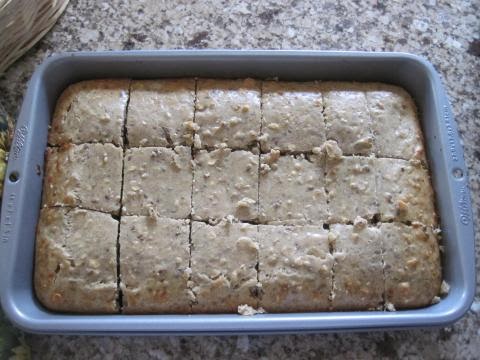
Protein Banana Walnut Brownies

Protein is important to eat with every meal and post-workout to spare muscle mass loss.  This is especially true when you are dieting.  


Banana Walnut Brownies

Ingredients:

  • 1/2 cup rolled oats
  • 12 scoops vanilla protein powder
  • 2 cups walnut meal (grind the walnuts in a blender…that’s it!)
  • 1/4 tsp baking powder
  • pinch salt
  • 2 medium bananas (very soft, mashed)* I used frozen, thawed over-ripe bananas from my freezer
  • 2 large Omega-3 eggs
  • 2 Tbsp pasture butter
  • 2 Tbsp water as needed

Directions: 
Mix the dry ingredients together in one bowl and the wet ingredients in another. Then mix the two bowls together. If needed, add a tbsp or two of water to mix well. 

Heat oven to 350F. Place ingredients in a metal 7 x 11 non-stick baking pan and bake at 350F for 12 mins until a knife comes out clean from the SIDES of the pan (not the middle). It should be slightly undercooked in the middle when you first take it out. If you bake this too long it will be very dry.

Makes 15 small bars

Nutrition Facts (Per Bar):

Calories: 190
Protein: 12 g
Carbs: 8 g
Fiber: 1.7 g
Fat: 12 g fat

Get your muscles on!

Mark Dilworth, BA, PES
Sports Fitness Hut